Bitcoin, often hailed as ‘digital gold,’ was designed to be a decentralized store of value, much like physical gold. However, its ability to hold true to this narrative has come under scrutiny. While Bitcoin’s journey has also intertwined with the rise of NFT marketplaces and digital ownership, understanding its achievements and limitations provides crucial insights. This article will explore Bitcoin’s evolving role in finance, compare it with the emergent tokenized gold, and analyze its impacts on NFT marketplaces and the concept of digital ownership.
Bitcoin’s Struggle as Digital Gold: A Tale of Reflection and Divergence
Bitcoin’s claim as “digital gold” suffers from critical challenges, eroding its narrative as a crisis hedge. In early 2026, amid market upheaval, Bitcoin and gold displayed divergent responses to global stress. As gold surged to $5,500, attracting safe-haven seekers, Bitcoin plummeted, a stark contrast revealing a negative correlation of -0.27 during the period. Bitcoin’s 24/7 tradability makes it vulnerable to reflexive sell-offs, linking it closer to volatile tech stocks, undermining its position as a stable store of value. This identity crisis strikes during moments of financial uncertainty, frustrating investors who sought refuge in Bitcoin as they would in traditional gold. Meanwhile, NFT marketplaces provide insights into digital ownership, underscoring unique token scarcity and control. As these digital assets mature, they might restore credibility to Bitcoin’s potential by promoting greater adoption and institutional interest.
Read more about Bitcoin’s identity crisis in 2026.
Bitcoin’s Shift from Digital Gold to High-Volatility Risk Asset

Bitcoin’s reputation as “digital gold” has shifted dramatically, now more aligned with high-risk assets than as a stable haven. Analysts, like Steve Sosnick, underscore Bitcoin’s performance convergence with equities, notably underperforming actual gold during market stress source. Bitcoin’s volatility, marked by significant drawdowns, limits its portfolio diversification benefits to cautious allocations, contrasting sharply with gold’s resurgence as a safe haven amid equity sell-offs. As stablecoins and tokenized gold offer less volatile blockchain options, Bitcoin’s role in the NFT marketplace and digital ownership remains foundational yet speculative, influenced by broader crypto sentiment and liquidity. Though its 21 million cap underpins digital scarcity, its risk profile often deters consistent use in NFT transactions, highlighting its identity crisis from potential stable value to speculative asset.
Tokenized Gold: A New Challenger to Bitcoin’s ‘Digital Gold’ Legacy

Tokenized gold has rapidly positioned itself as a formidable competitor to Bitcoin’s ‘digital gold’ status in the 2025-2026 landscape. Unlike Bitcoin, which has shown significant volatility and a retreat towards being perceived as a ‘risk asset,’ tokenized gold offers blockchain-based access to physical gold reserves. This hybrid asset model provides more stability, marked by a remarkable 177% market cap growth, against Bitcoin’s 6% decline during the same period. Tokenized gold combines the traditional appeal of gold as a safe haven with the efficiency of digital platforms, attracting significant interest as a potential primary on-chain gold equivalent.
Simultaneously, the integration of tokenized gold into NFT marketplaces and digital ownership ecosystems exemplifies its versatility. By tokenizing real-world assets (RWAs), such as gold, for blockchain fractional ownership and 24/7 trading, this development enhances liquidity and reduces speculative volatility. As its market cap exceeds $4 billion, tokenized gold not only complements NFTs but also extends their utility by incorporating tangible assets into digital portfolios. However, it does rely on custodians, introducing redemption risks not present in Bitcoin or traditional NFTs, requiring cautious investor navigation.
For further insights, explore the TradingKey analysis on tokenized gold in the NFT marketplace.
NFT Marketplaces: Bitcoin’s Shift from Digital Gold to Digital Asset
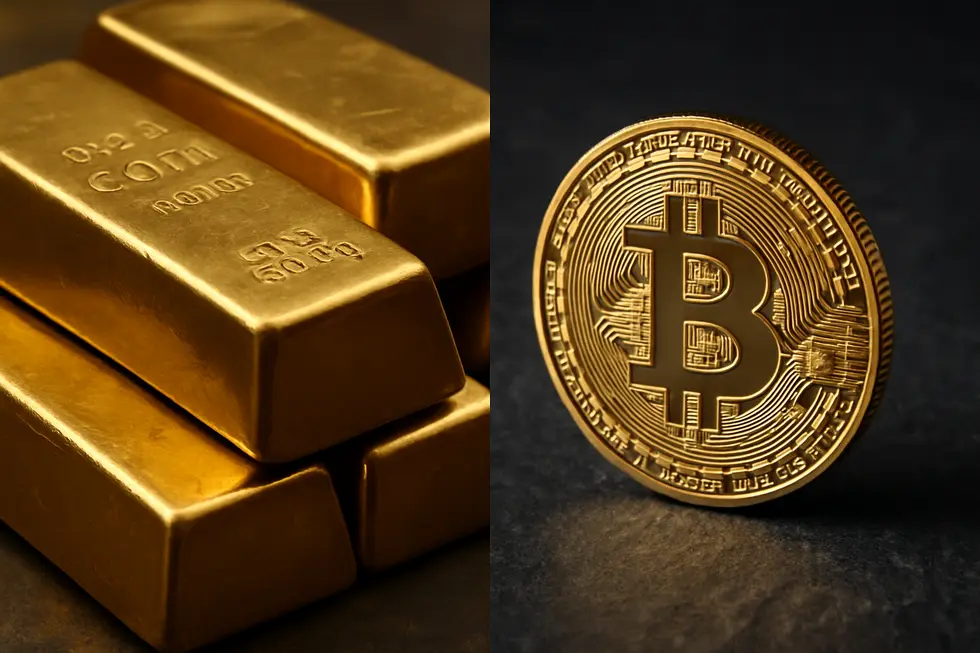
Bitcoin and gold fundamentally differ in nature and market behavior, challenging the ‘digital gold’ designation. Unlike gold, a tangible, historical store of value, Bitcoin exists solely on digital networks, dependent on cryptographic security. Gold’s inherent scarcity contrasts with Bitcoin’s engineered limit of 21 million coins.
Gold typically remains stable, showing moderate volatility and consistent annual returns of 5-10%. Bitcoin, however, displays intense volatility with dramatic value swings, indicating its role as a risk asset rather than a safe haven during market stresses, as seen in 2025, when gold significantly outperformed Bitcoin.
As Bitcoin faces an ‘identity crisis’, its fluctuating correlation with gold underscores its uncertain role. This identity crisis influences broader digital asset ecosystems, such as NFT marketplaces, which operate with distinct digital ownership principles, often on networks like Ethereum.
Bitcoin’s New Role in Digital Ownership and Beyond
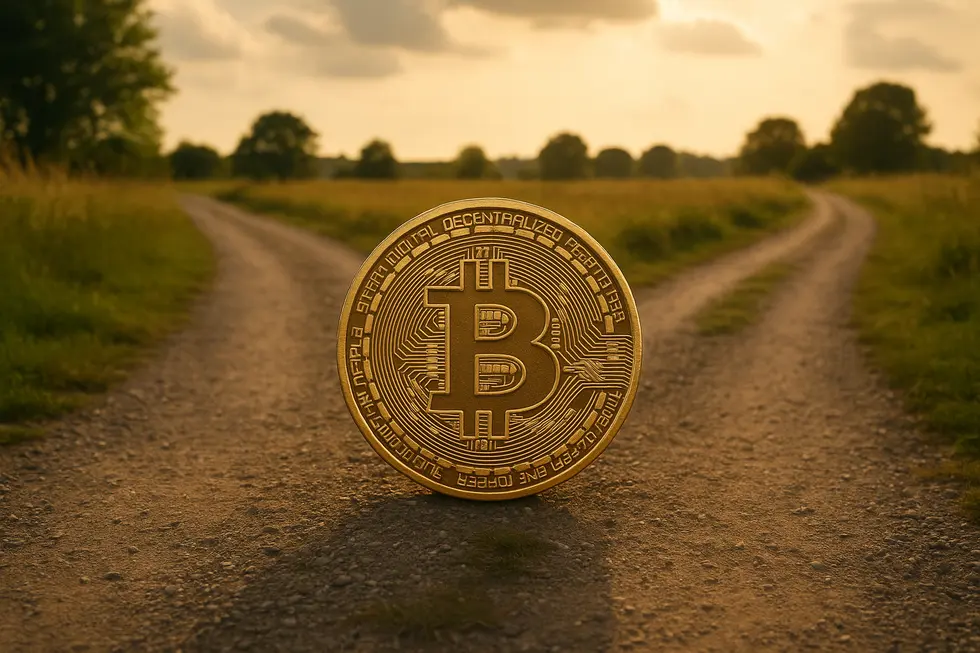
Bitcoin’s struggle as “digital gold” becomes evident when juxtaposed against gold’s consistent economic refuge status. In turbulent times, gold has surged, while Bitcoin has faltered, notably during 2025’s economic tensions when gold hit record highs as Bitcoin dropped significantly. This divergence highlights Bitcoin’s volatility and evolving identity as a speculative asset, more akin to tech stocks rather than a stable hedge.
Shifting from the digital gold narrative, Bitcoin should capitalize on its transparent, decentralized blockchain, moving toward a role as digital property. By focusing on facilitating value transfer in digital ecosystems, such as NFTs, Bitcoin can shed its mistaken identity as merely a gold substitute. This paradigm shift, alongside Bitcoin’s Layer 2 innovations, could transform NFT marketplaces, positioning Bitcoin as a secure and programmable enabler of digital ownership.
For a detailed exploration, refer to Nasdaq.
Bitcoin’s journey has been riveting, marked by its attempts to claim a role akin to digital gold. However, as financial markets evolve, Bitcoin’s volatility casts doubt on this title. Comparatively, tokenized gold offers a bridge between traditional and digital, offering security in the digital asset realm. Like Bitcoin’s place in NFT marketplaces and the growing discussion on digital ownership, understanding these dynamics helps redefine Bitcoin’s purpose. Continual exploration and adoption of these technologies will reshape their role and value in our economy.
🌐 Join the Monbase NFT community and stay ahead of the Web3 curve. 💬 Follow us on Telegram, Twitter, or Discord for drops and updates!
About us
Monbase Global is a strategic partner of OpenLive Group, focused on expanding the reach and utility of blockchain and digital asset applications across international markets. As a core collaborator in the Monbase NFT ecosystem, Monbase Global plays a vital role in driving cross-border partnerships, investment strategies, and user adoption beyond Vietnam. With a vision to build a decentralized digital economy rooted in trust and innovation, Monbase Global supports the international growth of NFTs, digital collectibles, and the use of the MBC token across various platforms. The partnership between Monbase Global and OpenLive Group brings together local insight and global ambition—creating real-world value for creators, collectors, and businesses alike.